
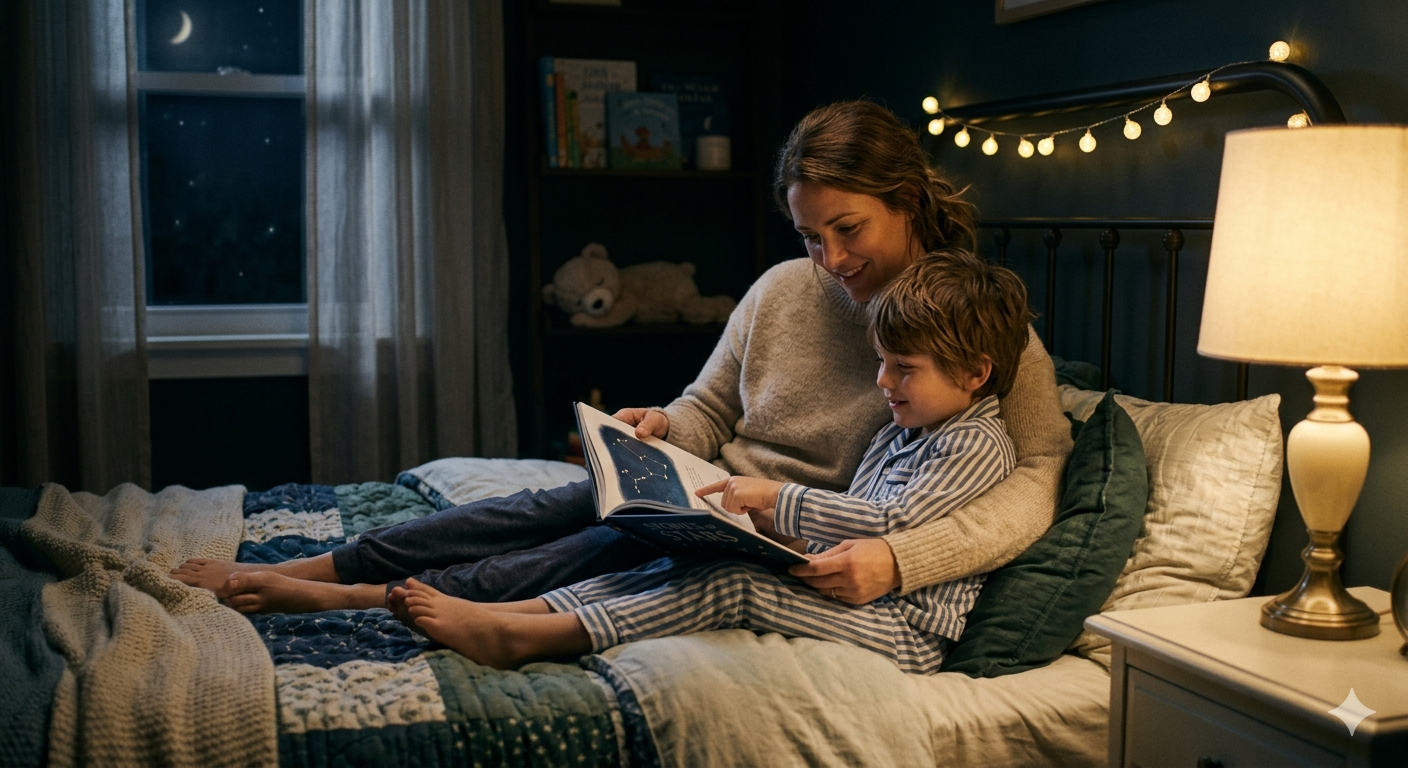
How We Accidentally Made Bedtime Easier
For a long time, I thought bedtime struggles were just part of parenting a neurodivergent child.
We focused so much on routines and schedules that I didn’t realize something important:
👉 The bedroom itself was overstimulating.
Too much light. Too much visual clutter. Too much “energy” in the room.
Once we started making small changes to create a calmer environment, bedtime slowly started feeling less stressful.
Not perfect. But easier.
And honestly? Some of the smallest changes made the biggest difference.
* Affiliate Disclosure: This page contains affiliate links. That means if you choose to buy something through these links, I may earn a small commission at no extra cost to you. As an Amazon Associate, I earn from qualifying purchases. I may also earn from other affiliate programs.
✨ Top Picks for a Calming Sensory Bedroom
If you’re overwhelmed and just want a few things that might help immediately, these are the biggest game changers for us.
⭐ Star Projector Night Light
This became one of the most calming parts of our bedtime routine. The soft moving lights helped redirect racing thoughts and created a peaceful atmosphere.
👉 See Projector Here
🧸 Weighted Blanket for Kids
Deep pressure can help calm the nervous system and reduce restlessness at bedtime.
👉 Check weighted blankets here
🌙 White Noise Machine
Helps block unpredictable sounds and creates a more consistent sleep environment.
👉 See White Noise Machine
🪟 Blackout Curtains
Especially helpful for kids sensitive to light or early morning wake-ups.
👉See Curtains Here

Why the Bedroom Environment Matters So Much
Many neurodivergent kids experience sensory overload throughout the day.
By bedtime, their nervous system is often still trying to process:
- Noise
- Bright lights
- Visual clutter
- Transitions
- Anxiety
That means the bedroom environment matters more than most people realize.
The goal isn’t a Pinterest-perfect room.
👉 The goal is creating a space that feels:
- Calm
- Predictable
- Cozy
- Safe
20 Calming Bedroom Ideas for Neurodivergent Kids
Lighting Ideas (One of the Biggest Factors)
1. Use Soft Warm Lighting Instead of Bright Overhead Lights
Bright ceiling lights can feel harsh and overstimulating at night.
Try:
- Warm lamps
- Soft lighting
- Low light in the evening
👉 Think cozy, not bright.
2. Add a Star Projector
This was one of the biggest changes for us personally.
At first I thought it would just be “cute,” but it completely changed the feeling of bedtime.
Instead of laying there focused on anxious thoughts, my child had something calm and predictable to focus on.
Now it’s part of our nightly routine:
- Lights off
- Star projector on
- Calm transition to sleep

3. Try a Gentle Night Light
Some kids feel anxious in complete darkness.
A soft dim night light can help create comfort without overstimulation.
Sound & Noise Support
4. Use a White Noise Machine
This helps reduce sudden sounds that can interrupt sleep or increase anxiety.
5. Try Calming Music or Nature Sounds
Soft rain sounds, ocean waves, or calming instrumental music can help create a relaxing environment.
6. Reduce Background Noise
If possible:
- Use rugs to soften sound
- Close doors softly
- Reduce loud evening activity nearby
Even small noises can feel huge to sensory-sensitive kids.
Comfort & Sensory Support
7. Add a Weighted Blanket
Weighted blankets provide calming deep pressure that many neurodivergent kids find comforting.
8. Choose Soft, Breathable Bedding
Some fabrics can feel itchy or overwhelming.
Look for:
- Soft cotton
- Bamboo fabrics
- Breathable materials
9. Use Sensory-Friendly Pajamas
Tag-free, soft pajamas made a bigger difference for us than I expected.

Visual Calm (Extremely Underrated)
10. Reduce Visual Clutter
Too many toys, colors, or decorations can make it harder for the brain to settle.
We noticed bedtime improved when the room felt visually calmer.
11. Use Calming Colors
Soft blues, greens, beige tones, and warm neutrals tend to feel less stimulating than very bright colors.
12. Limit Busy Wall Decor
A calmer visual environment can help reduce mental stimulation before sleep.
Create a Cozy, Safe Feeling
13. Add a Cozy Corner or Reading Nook
A small calming corner with:
- Pillows
- Soft blankets
- Books
can create a safe wind-down space.
14. Keep Favorite Comfort Items Nearby
Stuffed animals, favorite blankets, or comfort objects can help kids feel secure.
15. Try a Bed Canopy or Tent
Some kids sleep better in spaces that feel enclosed and cozy.

Temperature & Physical Comfort
16. Keep the Room Slightly Cool
A cooler room often supports better sleep.
17. Use Breathable Fabrics
Heavy or stiff fabrics can feel uncomfortable and overstimulating.
18. Add Gentle Airflow
Some kids find fans calming because of:
- White noise
- Air movement
- Temperature regulation
Routine & Environment Cues
19. Keep the Layout Consistent
Predictability matters.
Constantly rearranging the room can sometimes increase anxiety or dysregulation.
20. Create a Dedicated Wind-Down Space
Even a small area for:
- Reading
- Quiet play
- Coloring
can help signal that bedtime is approaching.
What Made the Biggest Difference for Us
The biggest improvements came from:
- Softer lighting
- Less visual clutter
- The star projector
- A calmer overall feeling in the room
And honestly, I stopped focusing so much on making bedtime “perfect.”
Instead, I focused on making the environment feel supportive.
That mindset shift helped just as much as the products did.

Common Mistakes That Can Make Bedtime Harder
❌ Bright overhead lighting at night
❌ Too much clutter or stimulation
❌ Overcomplicating the room setup
❌ Expecting instant changes overnight
Small changes done consistently tend to work better than trying to change everything at once.
Related Posts You’ll Want to Read
👉 Why Neurodivergent Kids Struggle to Fall Asleep (And What Actually Helps)
👉 What Actually Helped My Neurodivergent Child Sleep (After Nothing Worked)
👉 10 Proven Sleep Solutions for Kids Who Struggle at Bedtime
Final Thoughts
You do not need a perfect sensory room.
You don’t need expensive everything.
And you definitely don’t need to change all 20 things overnight.
Even one or two small changes can help create a bedroom that feels calmer, safer, and more supportive for your child.
Start simple.
Pay attention to what helps your child specifically.
And remember: progress matters more than perfection.